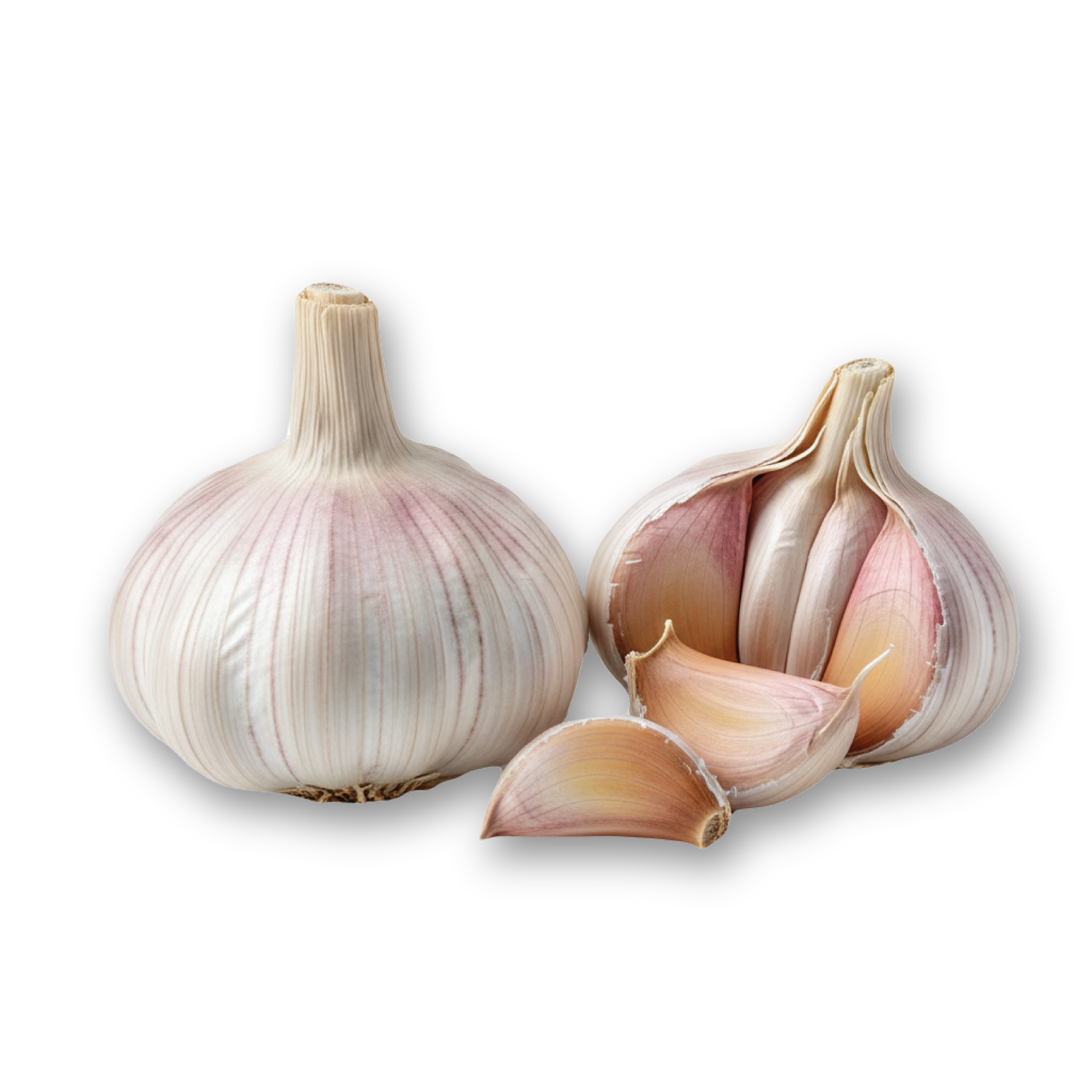
Garlic
Garlic is a strategic agricultural commodity with constant global demand, driven by its essential role in cooking, food processing, and traditional health practices. It is heavily traded across the Middle East, Europe, South and East Asia, with consumption largely unaffected by seasonal or economic fluctuations.
From a trade perspective, garlic is valued for its long shelf life, compact logistics, and high demand consistency. It serves both retail and industrial buyers, including food manufacturers and catering suppliers. For importers, garlic represents a low-risk, high-rotation product that anchors fresh produce portfolios with steady margins and reliable market absorption.

Nutritional Overview
Garlic’s allicin content is activated through tissue disruption, making freshness and clove integrity critical to functional value.
Nutrition Facts (per 100g)
| Energy | 149 kcal |
|---|---|
| Carbohydrates | 33 g |
| Fiber | 6.4 g |
| Vitamin C | 2.1 mg |
| Potassium | 401 mg |
Handling & Shelf Life
Storage temperature: 0–2°C
Dry ventilation required
Shelf life: 6–9 months
Packaging Options
Mesh bags
Cartons
Custom packs
Product Quality Framework
Garlic Grading
| Parameter | Method | Grade A | Grade B | Grade C |
|---|---|---|---|---|
| Bulb diameter (mm) | Caliper | 60-70 | 50-60 | 40-50 |
| Clove count | Manual | 6-8 | 8-10 | 10-12 |
| Moisture (%) | Lab | 60-65 | 65-70 | 70-75 |