
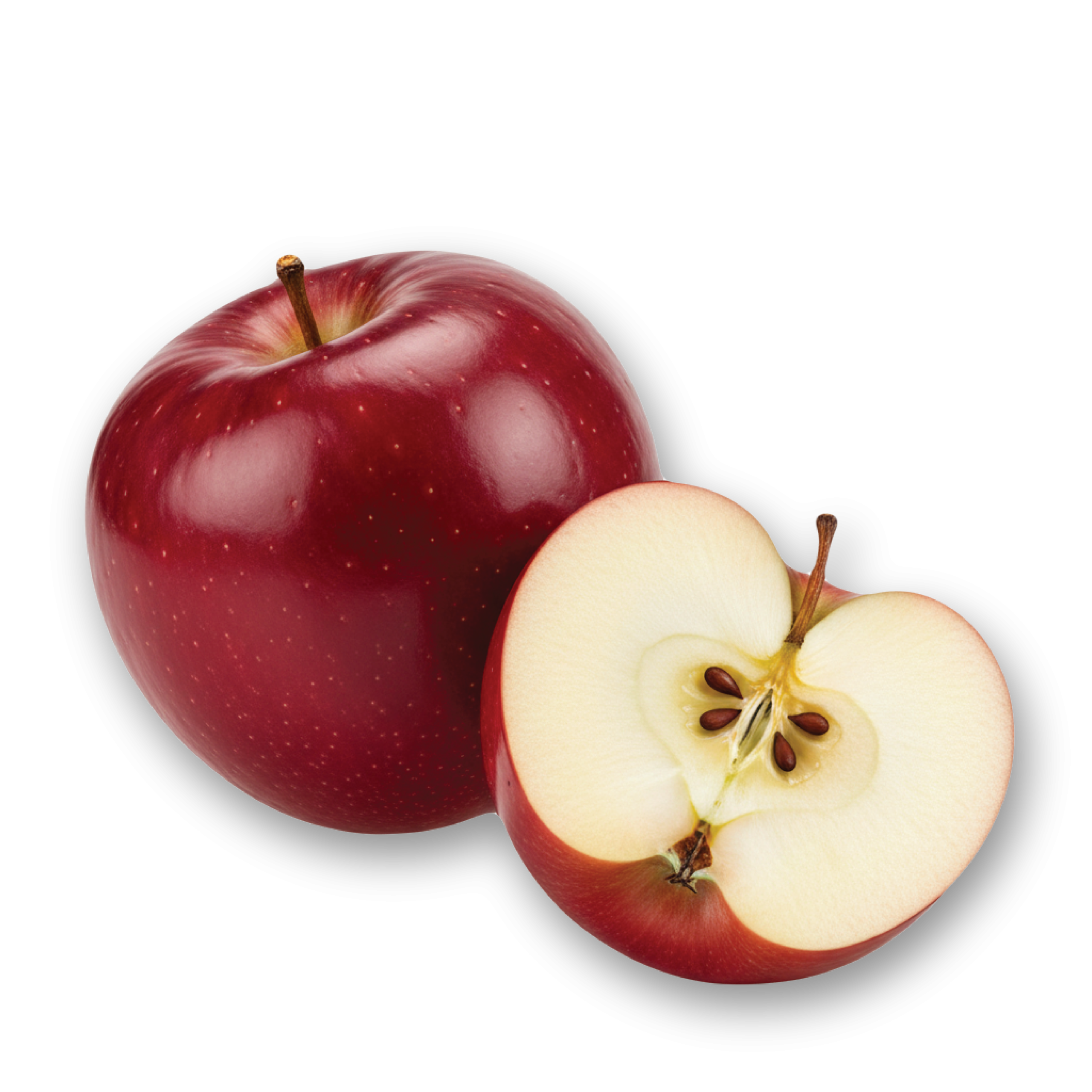
Red Apple
Apples remain one of the most universally consumed fruits in the world, with demand cutting across geography, culture, and income levels. They are actively traded in the Middle East, Europe, South Asia, and Africa, supported by year-round consumption and wide application in fresh, processed, and foodservice markets.
The commercial strength of apples lies in their variety diversity, logistical flexibility, and scalable supply models. They perform well in both premium and mass-market segments, allowing distributors to target multiple customer profiles simultaneously. As an export product, apples offer volume stability, consistent cash flow, and low market entry barriers, making them a cornerstone commodity in fresh produce portfolios.
Nutritional Overview
Red apples contain polyphenols concentrated near the skin, which play a role in antioxidant activity and post-harvest respiration control.
Nutrition Facts (per 100g)
| Energy | 52 kcal |
|---|---|
| Carbohydrates | 14 g |
| Fiber | 2.4 g |
| Vitamin C | 4.6 mg |
| Potassium | 107 mg |
Handling & Shelf Life
Storage temperature: 0–1°C
Controlled atmosphere recommended
Shelf life: 3–6 months
Packaging Options
Bulk cartons
Retail trays
Custom formats
Product Quality Framework
Red Apple Grading
| Parameter | Method | Grade A | Grade B | Grade C |
|---|---|---|---|---|
| Diameter (mm) | Caliper | 75–85 | 65-75 | 55-65 |
| color | Visual | ≥90 | 70–90 | 50–70 |
| Firmness (kg/cm²) | Lab | 6–8 | 5-6 | 4-5 |
| Brix (%) | Lab | 12–14 | 10-12 | 8-10 |